Why pursue a Pharm.D. concentration in pharmaceutical industry
March 21, 2026
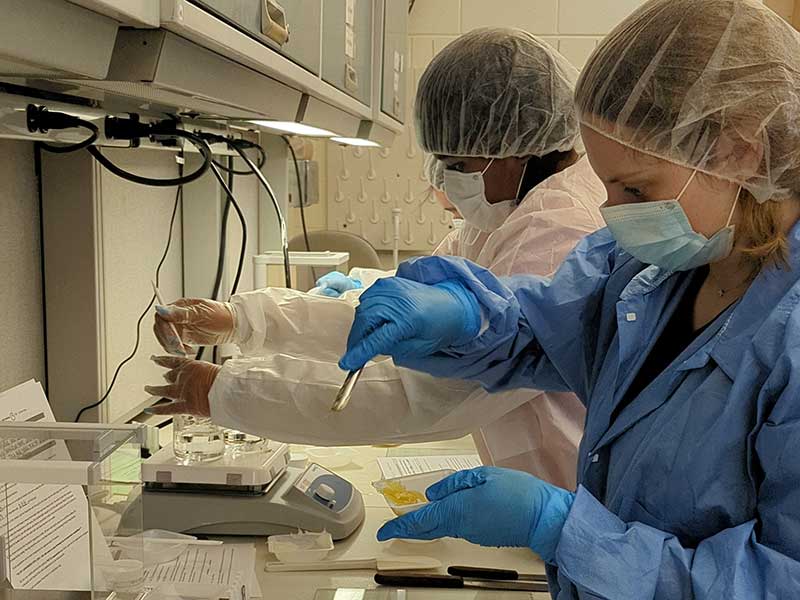
At VCU School of Pharmacy, the uncommon support students gain to achieve their goals opens the door to unlimited opportunities when they graduate. Our new pharmaceutical industry concentration for Pharm.D. students provides a pathway for education that few other health professional programs offer: one that specializes in preparing them to be problem-solvers in the pharmaceutical, biopharma and life sciences industry.
Keith Ellis, Ph.D., an associate professor in the Department of Medicinal Chemistry and program director for the school’s B.S. in pharmaceutical sciences, has championed the development of the pharmaceutical industry concentration. In addition to serving as faculty advisor to our school’s Industry Pharmacists Organization (IPhO) student group, Ellis works closely with regional life sciences industry partners and VCU’s Medicines for All, and he has mentored graduate students who’ve gone on to roles in the pharmaceutical industry. It’s a field that’s grown in popularity for future pharmacists.
“I think the increasing popularity is a function of: The students want to feel like they're making a contribution beyond working with individual patients,” Ellis says. “They want to feel a part of something larger, and there's no part of trying to take a drug to market to either cure a disease, or help treat a disease, that doesn't feel like something bigger that you're contributing to.”
Alumni tell us the path to launching a career in pharmaceutical industry starts by building a network through a fellowship, Ellis says. “The concentration is all about bridging that gap and helping take the students that we’re training clinically as pharmacists and getting them prepared and ready to compete for – and win – a fellowship in pharmaceutical industry and launch themselves in that career path.”
Ellis recently spoke with VCU School of Pharmacy News about what pharmacy students can expect to learn in the pharmaceutical industry concentration and why pharmacists offer companies in the industry “the best of both worlds” – clinical experience and drug information expertise – to advance their mission.
What opportunities will students have in the coursework for this pharmaceutical industry concentration that will set them apart?
When you come to pharmacy school and you get a Pharm.D., the majority of the coursework and the experiences that you have are geared toward training you to be a pharmacist in a clinical setting. You're really trained to treat patients. And, what we are finding in the new modern economy is there's a lot of opportunity for pharmacists beyond just patient care and beyond the different settings of patient care, like hospital or community pharmacy practice. One of the really exciting opportunities – and one of the ones that is greatly expanding right now – is for pharmacists specifically in drug development, and specifically in the clinical development phase of drug development.
It’s kind of the best of both worlds for a pharmacist. You're using all of that health care provider expertise and knowledge that you're gaining in your Pharm.D., and you’re taking it and applying it to helping people in a fundamental way by developing new products and helping new drugs be evaluated and get to market. And you're working in the pharmaceutical industry, which is a different working environment for pharmacists than something like a Walgreens or working in a hospital as a pharmacist.
If you had to choose, what's one class in this concentration that you would want to highlight?
The one that is the most different and the most unique for this concentration is actually the first required course for the concentration. It’s a course we've put together on: ‘What are the jobs for pharmacists specifically in pharmaceutical industry? What jobs are available, and what do these jobs do? How can pharmacists utilize their special and unique skill sets in pharmaceutical industry to develop new pharmaceutical drug products and get them approved by the FDA?’
In that class, we’re doing things a little bit different: We’re not just teaching lectures. We’re actually bringing in alumni and other people that we know from industry to talk specifically about the jobs that they do. These speakers tell the students what their path was, why they're doing the job they're doing, why they love it, why they feel like it has an impact, and how it makes them feel significant in making a contribution with their professional life. I think that's a unique thing that we're doing in this concentration to – very early in their Pharm.D. career – give students the knowledge and understanding of the career paths that are available. It also helps teach them what the road is that they should go down if that’s the destination that they want to reach.
What internships or job opportunities could students have with this concentration?
There are a lot of them. One of the things that’s really unique and interesting about jobs for pharmacists in pharmaceutical industry specifically is that the jobs are different than other job environments for pharmacists. You can be things like a medical science liaison and actually be talking about and building the scientific knowledge and information that physicians would use to understand the drug and recommend it and prescribe it to patients. You can be doing work as a clinical pharmacokineticist to actually do the late-stage experimental wet lab testing on the drug to generate data packets that are going to FDA for approval of the drug.
You can do things with helping, in various ways, to run and administer clinical trials: To oversee how they're designed, to get the data back from a clinical trial and analyze it – understanding whether the drug's really working or not, whether it's helping people, but also whether it’s harming people – whether it has off-target effects.
And then there are things like regulatory affairs and working with the FDA to get a drug approved. There’s a ton of different job opportunities in pharmaceutical industry if you're a pharmacist, and each of those has some kind of internship or experience you can have while you're in pharmacy school. You can go get an internship for the FDA and start learning about regulatory affairs. There’s both in-person and virtual internships in things like data analysis for clinical trials or analyzing pharmacokinetics data to understand if a drug is working or not in the early stages of clinical development. There's evaluating late-stage data in what we call pharmacovigilance to understand, when a drug is at that point of approval and after, whether it's really doing its job and whether there are any problems with it once a larger population starts taking it. There’s all kinds of internships and opportunities available to do all of those jobs while you’re still in pharmacy school.
Why do you think we are seeing more interest in this field among pharmacy students?
I think the increasing popularity is a function of: The students want to feel like they're making a contribution beyond working with individual patients. They want to feel a part of something larger, and there's no part of trying to take a drug to market to either cure a disease or help treat a disease that doesn't feel like something bigger that you're contributing to. I think that's one aspect of it.
I think another reason the students are really asking for it and the interest has really surged in pharmaceutical industry jobs is I think there's an increasing recognition that there is a better quality of life, there's a better lifestyle from those job positions. They are more of a 9-to-5-type job, although some of the alumni that came in talked about working nights and weekends a lot, depending on their job.
They're working on more of a scientific or a business project, and they're not directly interacting or seeing patients. And I think that has a lot of appeal for some people that are going into pharmacy where maybe their favorite thing isn't talking to a patient and counseling them about their medication. They want to be in health care; they want to be in biomedical sciences, but they're much more interested in the business and product development side than the actual clinical treatment of patients side of pharmacy.
The competition that our IPhO students do, for example: It replicates specific phases and, in a project-based way, replicates specific tasks in clinical development. Last year's project that they did, the way it was pieced together and the competition was designed, they had to do a specific piece on marketing. That's something you don't do with pharmacy students in a traditional training program for a clinician as a pharmacist: You don’t talk about marketing new pharmaceutical products. But in their overall competition, it was a little more business-focused: They had to not only take the clinical trial data but translate that into scientific and marketing packages. It's that kind of real-world application they did as part of that competition, that is something that you wouldn't necessarily get in pharmacy school if you didn't do that.
Why is it so valuable for pharmaceutical and life sciences companies to have pharmacists as part of their team?
There's an increasing realization in the pharmacy profession, as a whole, of the unique and really valuable skill sets and knowledge sets pharmacists can bring to pharmaceutical industry. From my background being more on the Ph.D. side, the majority of people I went to grad school with all are in pharmaceutical industry now. A bunch of them have moved out of research and development and are in clinical development now. What I'm used to seeing is a lot of these jobs in clinical development are going to Ph.D. graduates that have spent time in R&D and are more senior in their career and are moving out of doing discovery work or early-stage development into supervising and carrying out clinical development. Or otherwise, historically, these jobs have gone to M.D.s, gone to physicians.
That's what we’ve been used to, but I think increasingly industry is liking to hire pharmacists for these positions because they have that unique perspective gained from how we train pharmacists. They have a deep understanding of human physiology, of human anatomy, of human health from the biological side. They're also drug information experts about what drugs do, how they're made and how they act. So it's a better mix, if you will, of the more standard research-bench scientist Ph.D. knowledge set and the M.D. It's kind of a bridge between the two, which I think is why there's now so many opportunities for pharmacists in pharmaceutical industry. With clinical trials and with everything else that has to be done to move a drug product from early-phase clinical studies through to FDA approval and to the market, a pharmacist’s skill set and knowledge covers almost all the information that they need.
What are organizations and companies looking for in graduates, and how does this concentration help our graduates get there?
What pharmaceutical industry is looking for out of job applicants in general is different than what pharmacists are used to, because pharmaceutical industry isn’t looking specifically for clinicians. They are looking for people with good biomedical science training. They are looking for more of a scientist than a clinician. They're looking for somebody that knows how to solve problems. They're looking for somebody that has curiosity and motivation. They're looking for people that care about the mission of the company trying to help people and that are going to come in and really be dedicated to the goals of the project and the mission.
And I see this in the students that want to go into the industry track and want to do fellowships: They need different preparation than the students we’re sending into residencies or clinical fellowships, and that's one of the reasons the concentration was created.
The biggest difference I see with industry fellowships is these companies want students, while they’re in school, to have taken an interest in some aspect of pharmaceutical drug development. They want students who have gone and had an experience doing it. What industry wants to see is: ‘Are you interested, and was the interest enough to go actually pursue an experience?’ And, when the students are going to look for industry fellowships, they're expected to present data or present a story of what they did in one of these experiences.
The biggest realization for me was: I'm used to that expectation because the Ph.D. students in pharmaceutical sciences that I mentor have to go through that process. For the clinical pharmacists, when they go to do residency interviews, they don't have to present anything they've done; they’re interviewed as an employee, and it's all about how well they can treat patients. With industry, they're looking for this curiosity, for problem-solving, for motivation, for the fact that they're interested in really doing something and contributing something. And I think that has a lot of appeal to students for what they want to do with their life and what they want to do with their time while they're still in school.
What paths does this concentration open up for pharmacists as opposed to training for other health professionals?
Most other clinical professions don't have a track like this for their students. There is no industry concentration track for medicine. An interesting story, in one of our courses, we had a speaker, Eric Edwards, M.D., Ph.D., one of our alumni who started and sold a successful pharmaceutical company and now has another one. In hearing him come to class and talk about his story, he did his M.D., he was doing his Ph.D., he started his company – because his mission was what the company was doing. And it got to the point where he was going to be forced to step away from the company to go do his medical residency if he wanted to continue as a physician. He decided not to. What that really made crystal clear to me is that medicine doesn't really have a track where you're being trained to go into industry and really work on new drugs. You have to finish and complete the long process of becoming a full M.D. with the residency and specialty and everything else, then you can go into industry if you want.
It would be like us forcing the pharmacy students to all go through a residency and do clinical training before they could think about going into pharmaceutical industry. At the end of the day, you don't need to do that, and it's nice for us to now have this track that can focus and channel pharmacy students into industry as soon as possible. It prepares them for fellowships specifically already in pharmaceutical industry. Our alumni have been clear with us that the career path is to go get a fellowship in industry, and that helps you build your network, and that's what launches your career into pharmaceutical industry. The concentration is all about bridging that gap and helping take the students that we’re training clinically as pharmacists and getting them prepared and ready to compete for – and win – a fellowship in pharmaceutical industry and launch themselves in that career path.
If a student is deciding between concentrations, what would you want them to know?
Students should know that, at the end of the day, the pharmaceutical industry path for Pharm.D. Is no more difficult or no less difficult than any other path. It's different. It requires some different work and some different experiences. But it also opens up a career path that is much more varied and has many more opportunities than a traditional clinical role for a pharmacist.