Why pursue a Pharm.D. concentration in digital health
Feb. 9, 2026
At VCU School of Pharmacy, students gain uncommon support to achieve their goals, opening the door to unlimited opportunities when they graduate. In the new digital health concentration for Pharm.D. students that launched last fall, those unlimited opportunities stem from having the skills of a pharmacist, a computer science engineer, an innovator and an entrepreneur, all rolled into one.
Dayanjan "Shanaka" Wijesinghe, Ph.D., an associate professor in the Department of Pharmacotherapy and Outcomes Science, has championed the development of the digital health concentration and has been educating students on emerging digital health tools and technologies – from AR and VR to 3D printing to AI and beyond – for over a decade.
For several years, Wijesinghe and the students – and now, recent grads – in his lab have created tools using AI, including Pharm Tutor AI, an interactive study partner now used by pharmacy schools and pharmacy students across the country. He’s helped VCU students build their own startups, identify unanswered research questions ripe for new discoveries and even earn national recognition for the digital health products they’ve built.
Wijesinghe has seen how recent graduates who’ve completed independent study or digital health projects in his lab have benefitted from his focus on training them in the skills companies and organizations with a digital health focus need from today’s graduating students.
“We can train our students to well exceed the skill sets that (these companies) want,” Wijesinghe says. “With several of the grads we’ve already trained who founded our school’s Pharmacists for Digital Health student organization, we followed the same approach – seeing what companies wanted and training our students based on those needs –, and every single one of our graduates was a success. We are not training them to go outside of their primary discipline; we are training them to add value to their primary discipline by training them in these computational techniques.”
Wijesinghe recently spoke with VCU School of Pharmacy News about what pharmacy students can expect to learn in the digital health concentration and why pharmacists and health care professionals with a background in engineering digital health solutions are in higher demand than ever before.
What opportunities will students have in the coursework for this concentration that will set them apart?
Primarily, a lot of it is going to be project-based learning, and they will learn how to apply concepts like artificial intelligence. A new topic we’re exploring is vibe coding, but we’ve been well-versed in using virtual reality, augmented reality, rapid prototyping – applying all of that to health-related problems.
Other students will learn about health-related challenges and how to implement pharmaceutical interventions, but the students in this track will learn more along the lines of how to implement digital interventions. Things like, ‘How would try to treat something like depression but using something like virtual reality?’ ‘How do you improve a patient's glucose management through AI-driven lifestyle coaching?’ – those types of digital interventions or digital health applications.
They are not only going to be learning about it; they will be developing and deploying those applications as they learn. So essentially, the way I look at it, straight out of Pharm.D. school, if they want to take an entrepreneurial route, they will have a product that they can take. If they want to join a digital health company, then they not only get to talk about what they learned, but they can show them: ‘This is what I built. It’s live. Other people are using it. This is what it looks like.’ It's a very hands-on program. Students learn the problem-solving skill sets that are associated with health care, but all in the computer science, digital type of realm.
If you had to choose, what's one class in this concentration that you would want to highlight?
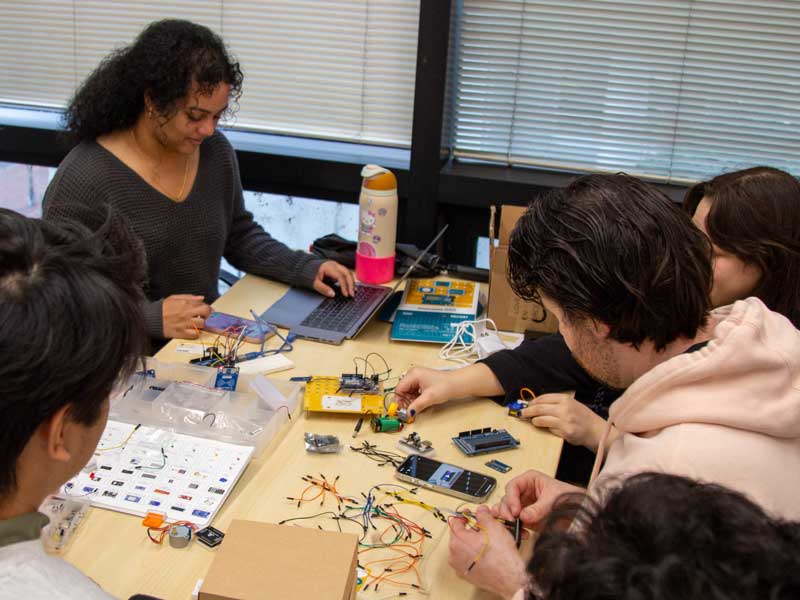
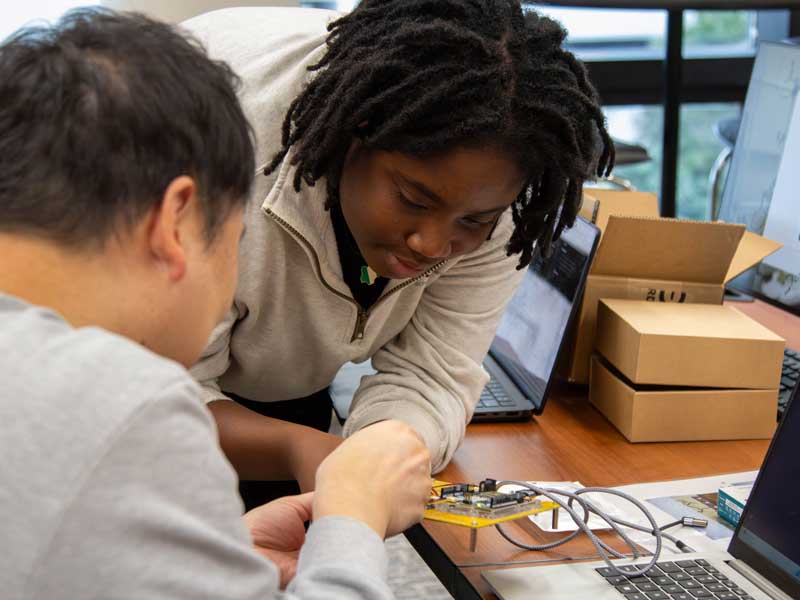
I would say Introduction to Data Science and Rapid Prototyping would be the entry class. It's two credits, one semester, and you get exposed to everything from AI to virtual reality to microelectronics, 3D printing, other rapid prototyping techniques. It’s a lot of things that you get to play with and learn, and it’s also, where I would say people will really start understanding what this concentration is all about. It’s offered in our students’ P2 year. I’ve also had P1 students who are asking if they can do independent research studies, and that's perfectly fine. You will get the same exposure to technology- and project-based learning, even in your independent research study.
One project the students in our Introduction to Data Science and Rapid Prototyping course have worked on is called ‘Identifying hidden insights from scientific literature.’ We start with the ABC co-occurrence model, which is something like, ‘If Ann knows John and John knows Scott, does Ann know Scott?’ In this model, the criteria for answering ‘does Ann know Scott?’ has not been met yet, but it's the next logical question. Using AI with this ABC co-occurrence model has led to something that we've had success with: Identifying hidden druggable targets or potentially druggable targets just by combing the literature. So, our two student teams, each of them deployed an ABC co-occurrence model for testing as part of the class. There's not a single program outside of computer science that trains students to actually do something like that.
What internships or job opportunities could students have with this concentration?
Startups would be looking for a lot of students with this background because there are a lot of AI-driven health care startups starting right now. It’s easy to find AI engineers. It's very rare and almost impossible to find AI engineers who have a health care background. And for those who are trying to create digital technologies as digital health interventions, those startups really need people with this background.
Others, even the traditional pharma companies, are really looking for those who are classically trained in health care but with a very strong foundational understanding of how to use computer science, how to use computational approaches, how to build machine-learning algorithms and all of that. Traditional pharmaceutical industry companies will be interested in students like this. The FDA and other organizations will be interested in students like this. And also industries that are just being born, like the startups, will be extremely interested in students like this. And of course, health care IT, hospitals, health care systems – all of them will also have an interest in students from this concentration.
Tell me why it's so valuable for companies to have AI engineers with a health care background.
Especially in this day and age, writing or creating applications is really easy. If you scope out a project and give it to a good AI platform, they'll get you about 80% of the way. So the value of the computer scientist building the application is getting diminished a lot, but now, this increases the value of the person with the health care background, because that scoping and planning of the project becomes extremely important. AI will build whatever you tell it to build, but if you don't have a good grasp of the problem you're trying to solve, who your target population is, how the health care professional will perceive this solution – that initial problem scoping cannot be done by somebody who doesn't have a health care background. And, once the AI builds it out, then it's a matter of testing. Again, it used to be that a computer scientist can test the bugs, but the logical errors – how it can be used in a health care setting and all of that – computer scientists don't have the training to test, but students like ours do.
So, if you look at the entire ecosystem of jobs in an area like this, it used to be there would be one person with a health care background, a massive team of computer science engineers building applications, and building those applications took a long time. But now, with AI coming into the mix, the building of the application is really fast, really streamlined. Now, there’s space for more applications to be built, and we don't have enough people with that health care background to go around because an M.D. or a Pharm.D. that is classically trained and that has that engineering background is extremely rare.
So what we're trying to do is teach students: Yes, you are a pharmacist first, you’re a Pharm.D. first, you’re a health care professional first. But you are going to graduate with a very strong background in AI applications development, health care applications development, digital health solutions development, so that, when you couple your expertise with an AI, you essentially get a full team that can build applications.
Are there any other certifications students can get as part of this concentration that will showcase their skills to future employers?
We have this set of digital badges with different levels: beginner, intermediate, advanced and entrepreneur. What's interesting about these badges is, you can see the occupations and kinds of jobs that are available for people who’ve earned these digital badges – and how their job outlook has looked in the last three years.
If you get to the digital health entrepreneur level, you’ve done the beginner, intermediate and advanced levels. Now, you are ready to create a product and become a founder of a digital health-related startup. To get to this level, these students really need to have an LLC registered, and we are going to take them through everything, from registering an LLC to getting it registered with the System for Award Management (SAM) and all of that. Essentially, they are going to graduate with a fully functional startup. If they don't want to pursue that startup, then they have all these other jobs that are available – innovation consultants, digital marketing specialists, digital transformation managers. These are the job opportunities. For people with a computer science background, you can see the number of jobs for them going down because AIs are taking over, but the jobs for those who are trained in health care coming into this field keep going up.
What are organizations and companies looking for in graduates, and how does this concentration help our graduates get there?
Companies want people who have a very good background in health care, who can take a look at their existing production R&D pipeline and come up with new insights to improve the pipeline, shorten the time, but do it in a way that still keeps it solidly grounded in what they are trying to achieve.
Somebody with a CS background can shorten the pipeline, but because they don't understand the problem they are trying to solve and what the solution needs to look like, the ways they shorten the pipeline might not get anywhere. But when a health care professional looks at it, they can identify: ‘That's the problem. This is the solution. These are the steps you need to actually get to the solution. What are we doing with these other things that are not necessary? We just need to streamline this part of the pipeline to go from A to B.’ That's what companies are looking for: How can we get to market faster with the lowest possible overhead?
So, for example, by the time they are done, our students will have applications running on Google Cloud, FastAPI back-end, React front-end, maybe even Firebase database – fully functional web applications running. That's the training they're going to be getting.
If a student is deciding between concentrations, what would you want them to know?
One thing I keep telling our students – if they're committed to wanting to do, for example, our geriatrics concentration but also really like the digital health concentration – don't try to pick one or the other: Come talk to us. If you want to do the geriatric concentration, do the geriatric concentration, but then you can come and do an independent research study in digital health that applies engineering. It shouldn’t be one or the other. Our goal here is to make sure the students are best placed to succeed in whatever path they want to take. So, don't be split between, ‘I need to do this, but I like this.’ We’ll make it work.
What would you say to employers that are considering hiring health care professionals to help with their AI or digital health solutions?
I still think a lot of people haven't realized what somebody with a health care background brings to both the traditional pharmaceutical industry and also to the many startups still to come. If there are any employers who want to see the extra value proposition brought by these students, we would love to talk to them. And we also want to talk to them to find out, ‘What kind of skill sets do you need if you want to hire someone like this?’ We can train our students to well exceed the skill sets that they want. With several of the grads we’ve already trained who founded our school’s Pharmacists for Digital Health student organization, we followed the same approach – seeing what companies wanted and training our students based on those needs –, and every single one of our graduates was a success. We are not training them to go outside of their primary discipline; we are training them to add value to their primary discipline by training them in these computational techniques.